Ensuring the supply of drinking water for approximately 15,000 inhabitants is a highly complex, ongoing technical task. For this purpose, the municipality of Gründau operates an extensive network of about 110 km in length, as well as 7 elevated tanks with a total capacity of 3,130 m³. We deliver fresh drinking water from our own Gründau wells to over 4,700 household connections – 24 hours a day, 365 days a year. As of 07/01/2025, the technical operations management will be carried out by Stadtwerke Gelnhausen (SWG) on behalf of the municipality. Our goal: Maximum operational reliability through state-of-the-art maintenance standards and continuous quality monitoring.
In case of pressure drop, visible pipe bursts in public roadways, or massive disruptions to the water supply, please contact the Gelnhausen Municipal Works control center immediately:
Emergency hotline (24 hours): 06051 838 47-77
Jurisdictional Boundary Notice: The water utility's responsibility ends at the main water meter. For leaks and pipe bursts within the private house plumbing (behind the water meter), please contact a local plumbing company.
If you would like to apply for a new drinking water connection/repair or construction water, please use our central online portal. The technical inspection and implementation will be carried out by our partner, Stadtwerke Gelnhausen, after you have placed your order online via the EAM portal.
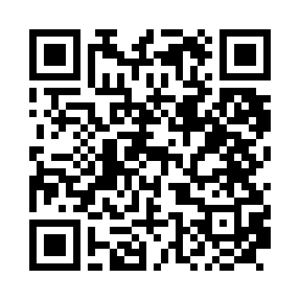
or scan the depicted QR code with your mobile device.
For a smooth application process, we recommend our PDF step-by-step guide.
Important notes for applicants:
Costs Please note that processing and acceptance fees will be charged in accordance with the current administrative fee schedule.
Right of access By submitting the application, you agree to grant the authorized representative of the Gelnhausen Public Utilities access to your technical facilities in accordance with the statutes.
FAQ: Why we are not installing new garden water meters?
The safety of the water supply does not end at the property line but encompasses the entire installation. Garden pipes present specific risks: The risk of stagnation: Garden connections are often not used for months, especially in winter. Water that remains in the pipe for longer than 72 hours is considered „stagnant water.“ Danger from biofilms: Biofilms can form in these dormant pipe sections (so-called dead legs). These are an ideal breeding ground for bacteria such as Pseudomonas aeruginosa.
Recontamination There is a risk that germs from the garden area could migrate back into the central house installation or even into the public network.
Our recommendation for your safety. Although this measure serves primarily as a precaution, it is based on applicable standards and our bylaws:
1. No new installations: To protect the overall system, no new garden water meters will be approved from now on.
2. Voluntary Decommissioning: We recommend that all citizens proactively and professionally decommission existing garden water meters and their associated supply lines. This is the safest way to permanently eliminate stagnation areas in your household plumbing. Legal Background In accordance with §5 para. 3 of our Water Supply Ordinance (WVS), water consumption systems must be operated in such a way that impairments to water quality are prevented. Furthermore, the avoidance of stagnation corresponds to the current state of the art (DVGW Code of Practice W 551-4). We thank you for your understanding and cooperation in jointly maintaining the highest level of drinking water quality in Gründau.
Monitoring surface waters is an important task for protecting our environment and water quality. In Hesse, this task is carried out by the responsible water authorities. The focus is particularly on checking ammonium, nitrate, and phosphorus levels, as these substances are essential indicators of water quality.
In our federal state of Hesse, the Hessian State Office for Nature Conservation, Environment and Geology (HLNUG) conducts regular sampling on behalf of the state. These investigations also include two specific sites in the municipality of Gründau:
According to current information from the lower water authority of the Main-Kinzig district (MKK), measurements at both locations show no irregularities. The measured values are within the safe range, meaning there are no significant contaminations by ammonium, nitrate, or phosphorus.
The measurement results are accessible to the public and can be viewed online. On the Website of the HLNUG Under the measurement data portal for surface waters, interested parties will find detailed and regularly updated information on the measurement results. A direct link to this measurement portal is also integrated on the homepage of the municipality of Gründau in the „Town Hall & Citizen Services“ section under the heading „Drinking Water.“.
To avoid additional costs, the municipality of Gründau is forgoing the creation of its own monitoring concept and the execution of its own measurements. Instead, the municipality relies on the professionally conducted and comprehensively documented measurements of the HLNUG. This ensures that water quality monitoring is carried out effectively and cost-efficiently.
For further information and to view the current measurement data, please visit the HLNUG website or use the direct link on our community homepage.
The municipality of Gründau will be measuring drinking water consumption with digital radio water meters from now on. The replacement will be carried out by our contracted specialist companies in the coming 1-2 years. The calibration period for water meters is 6 years. The replacement of all approximately 4,800 water meters installed in Gründau will take about 2 years.
A calibrated digital radio water meter of the type Hydrus 2.0 from Diehl will be installed. You are welcome to find information about this product here read. The radio water meter stores various consumption values for a certain period, which can be retrieved wirelessly from outside the building, e.g., by a municipal meter reader. Data transmission is protected against unauthorized access by encryption.
The key benefits for water customers are: No more reading cards or appointment scheduling are required for meter readings. This generally eliminates the risk of fraudsters gaining access to the point of consumption under the false pretense of meter reading. Furthermore, water losses due to broken pipes or equipment damage in the household installation can be automatically detected, providing important information to the consumer (e.g., the homeowner).
The essential advantages for the municipality of Gründau are: Meter readings are taken faster and are accurate to the day. Billing is simplified through direct recording of digital measurement data.
You can find more information on radio-based water meters in the following Frequently Asked Questions (FAQs):
What are the advantages of using radio-based water meters?
The new radio-based water meters offer the following benefits for water customers:
Your cooperation is no longer required for the meter reading. Appointments or reporting your meter reading to the Gründau municipality are no longer necessary.
The radio water meter records measurement data using ultrasound, which causes little wear and tear in the device, making the meters less prone to malfunction and repair.
Possibility of detecting and alerting a leakage
What consumption values are stored in the meter?
The radio water meter records the following data for a certain period: meter number, date and time, consumption values such as total volume, forward volume, backward volume, and minimum/maximum flow rate, as well as water temperature, error messages, and the meter's system status.
You can view the current data on the wireless water meter's digital display. The display is turned off to conserve the device's battery. To turn it on, described.
How can the meter's display be activated?
To activate your meter's display, you must first open the display cover. Then press the optical button; you can navigate through the menu by pressing the optical button. The optical button is located on the front of the meter, under the cover flap. You can find a detailed description here.
How is the data retrieved from the wireless water meter?
The data stored in the meter is transmitted unidirectionally to the meter reader via a radio signal. To do this, the meter reader must be near the consumption point but does not need to enter it („walk-by method“). The electronic data is typically retrieved once a year on a scheduled basis for billing purposes. In addition, ad hoc retrieval is possible if, for example, the electronic data is needed due to a pipe burst or other emergencies.
What is the radio power output?
The wireless water meter used transmits at a power of approximately 7 milliwatts (mW). The Federal Network Agency permits up to 25 mW.
For comparison: A baby monitor transmits at about 10 mW, Bluetooth at about 100 mW, a Wi-Fi router at about 100–200 mW, and a cordless phone at about 250 mW. A cell phone transmits at a power of 1,000–2,000 mW.
Furthermore, the meter does not transmit continuously, but only sends radio signals at regular intervals (approximately every 14 seconds). A radio sequence lasts between 4 and 15 milliseconds. Between transmissions, there must be a transmission pause that is at least a thousand times longer than a radio sequence or transmission. The total transmission time for a meter is therefore only about 85 seconds per day at most.
We process your data in accordance with the applicable statutory provisions.
Wireless data transmission is protected against unauthorized access by 128-bit encryption with a rotating wireless key. The encrypted data packets are stored and processed at the Gründau municipal data center in accordance with applicable legal requirements.
Data Protection Information can be found in the Data Protection Information of the Municipality of Gründau.
The radio water meters used comply with the applicable legal requirements for data protection. You can find information on this at the following link: Statement by the Hessian Commissioner for Data Protection and Freedom of Information (HBDI).
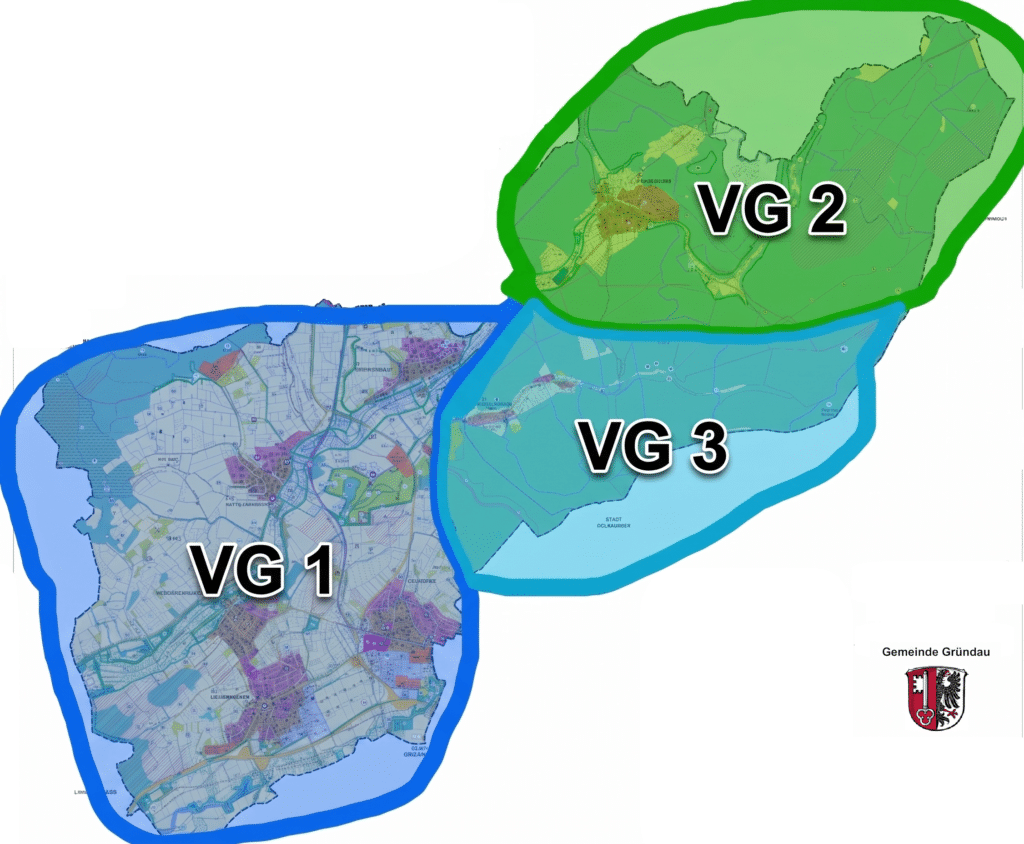
The drinking water in the municipality of Gründau is a strictly regulated food product of the highest quality. We source 100 % of our water from our own regional well systems. To guarantee you uncompromising purity and a reliable supply at all times, our entire network—from extraction through the elevated tanks to your home connection—is subject to a rigorous, professional quality management system.
Our proactive monitoring mechanisms and flushing schedules ensure consistently high water quality. In close cooperation with accredited specialized laboratories and under the supervision of the Main-Kinzig District Health Department, we conduct ongoing physical-chemical and microbiological tests in accordance with the current Drinking Water Ordinance (TrinkwV). The result: safe, clear, and healthy drinking water for all residents of Gründau.
Below, we provide you with detailed and up-to-date test reports (comprehensive analyses) for your specific service area in a transparent manner. Please select the analysis that corresponds to your place of residence:
The municipality of Gründau provides special hydrants for temporary water extraction from the public supply. As the safety of our drinking water infrastructure is of utmost importance, allocation is carried out according to strict hygienic and technical quality standards.
HYGIENE PROTECTION & NETWORK INTEGRITY
To prevent recontamination, only standpipes owned by the municipality may be used throughout the entire municipal area. Our equipment is equipped with certified backflow preventers that meet the high standards of the DVGW regulations. The use of private or third-party standpipes is prohibited for safety reasons.
We want to keep your wait times at the municipal yard as short as possible. That's why we've streamlined the process for you digitally:
CONDITIONS AT A GLANCE
Note: Please understand that a standpipe output is not possible without a prior appointment confirmation and data collection.
Here you will find interesting facts about our number one food – drinking water.
The short films come from the „Water Portal“ of the BDEW (German Association of Energy and Water Industries). Here, current topics and tasks of water supply are explained simply and comprehensibly.
If you require information and advice, please make an appointment with the building department.
The town hall is open today at the following times:
Then simply contact us anytime using the following contact options:

Forms & Online Services

Appointment Scheduling

Waste & Disposal

Defect report

Current events
Forms & Online Services
Appointment Scheduling
Waste & Disposal
Defect report
Current events